

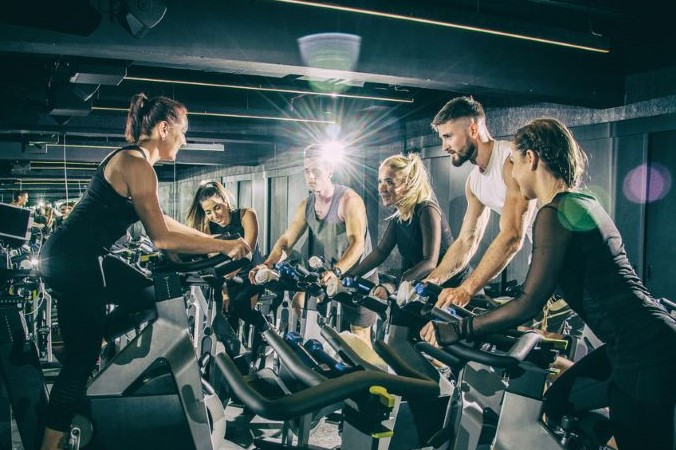
The challenge of maintaining cardiovascular fitness and lower limb muscular conditioning during orthopaedic rehabilitation is one that physiotherapists and sports medicine physicians in Singapore navigate regularly. The most common rehabilitation constraint is the need to load the cardiovascular and musculoskeletal systems sufficiently to maintain adaptation while eliminating the impact forces that stress healing tissue during post-surgical recovery or acute injury management. indoor cycling singapore facilities provide a cardiovascular and lower limb training tool that satisfies both requirements simultaneously, making it one of the most valuable bridge training modalities available in Singapore’s rehabilitation-to-performance continuum.
The Biomechanical Case for Cycling in Rehabilitation
The pedalling motion of indoor cycling is a closed kinetic chain movement that loads the lower limb musculature without the impact forces generated by walking, running, or jumping. The continuous rotational motion distributes loading across the hip, knee, and ankle joints throughout the pedal cycle without the sharp loading peaks that characterise terrestrial locomotion.
Joint Loading Characteristics
The patellofemoral joint loading during indoor cycling at appropriate resistance and cadence is substantially lower than during equivalent-intensity running, making cycling an appropriate cardiovascular training tool in the earlier stages of anterior knee pain, patellofemoral syndrome, and post-anterior cruciate ligament reconstruction rehabilitation when running remains contraindicated.
Hip joint loading during cycling is similarly reduced relative to weight-bearing activities, supporting its use during femoral stress reaction recovery, hip labral repair rehabilitation, and total hip replacement recovery when weight-bearing activity is limited. The saddle supports a portion of body weight throughout the pedal cycle, reducing the compressive loading on the hip joint relative to walking on the same limb.
Muscular Loading and Rehabilitation Value
Despite its low impact characteristics, indoor cycling produces meaningful muscular loading in the quadriceps, hamstrings, gluteal muscles, and calf musculature that is relevant for maintaining muscular conditioning during lower limb rehabilitation. The ability to control resistance independently allows progressive loading that can be calibrated precisely to the current tissue tolerance of a rehabilitating structure without the binary all-or-nothing loading that many rehabilitation contexts create.
Clinical Contexts Where Indoor Cycling Is Most Valuable
Specific rehabilitation scenarios in Singapore’s clinical population benefit particularly from indoor cycling as a bridge modality.
Post-Anterior Cruciate Ligament Reconstruction
The anterior cruciate ligament reconstruction rehabilitation timeline in Singapore typically restricts running until graft healing is sufficiently advanced, usually four to six months post-surgery depending on graft type and rehabilitation progress. Indoor cycling at low resistance and high cadence can typically be introduced within four to six weeks of surgery, providing cardiovascular maintenance and quadricep activation through the intermediate rehabilitation period where other training options remain limited.
Stress Fracture Recovery
Lower limb stress fractures in Singapore’s running and high-impact athlete population require complete elimination of impact loading during healing. Indoor cycling provides the cardiovascular maintenance that prevents significant deconditioning during the six to twelve weeks of non-impact restriction that stress fractures typically require, preserving aerobic fitness that would otherwise decline substantially during a solely rest-based recovery.
True Fitness Singapore’s indoor cycling facilities and qualified coaching staff support rehabilitation-stage members in using the format appropriately within their clinical recovery context. True Fitness Singapore facilitates the communication between its coaching staff and members’ physiotherapy and medical teams that makes safe rehabilitation-stage cycling participation practically achievable.
FAQs
Q. – My physiotherapist has cleared me for indoor cycling four weeks after knee surgery. What should my first sessions look like?
Ans. – Begin with fifteen to twenty minutes at very low resistance and comfortable cadence, prioritising pain-free range of motion over any cardiovascular intensity objective. Progress session duration and resistance only when the previous level is completed comfortably without pain or swelling in the post-session period.
Q. – Is indoor cycling appropriate during active plantar fasciitis rehabilitation?
Ans. – Yes, with attention to foot position. Ensure the ball of the foot is correctly positioned over the pedal axle to avoid excessive plantar fascial loading through an inefficient contact position. Toe cages or clipless pedals that allow a neutral foot position are preferable to flat platforms that allow the foot to slide during the pedal stroke.
Q. – How do I communicate my rehabilitation status to indoor cycling instructors at Singapore gyms?
Ans. – Arrive five minutes before class to speak with the instructor directly, specifying your condition, the resistance and movement modifications you need to apply, and any signals that should prompt you to stop. Bringing your physiotherapy discharge or management letter provides specific clinical context that qualified instructors can apply to your class participation guidance.
Q. – Can indoor cycling help maintain cardiovascular fitness during recovery from a hip replacement in Singapore?
Ans. – Cycling can be introduced in the post-hip-replacement rehabilitation timeline at a stage determined by your orthopaedic surgeon and physiotherapist, typically when weight-bearing is fully established and hip flexion range of motion is adequate for the pedal stroke. The timing varies significantly by implant type and surgical approach, making direct clinical guidance essential before commencing.
Q. – Is there a risk that indoor cycling during rehabilitation loads healing tissue more than I realise?
Ans. – This risk exists when resistance is set too high or when compensatory movement patterns during cycling create loading on structures not intended to be stressed during the session. Erring toward lower resistance, shorter sessions, and careful attention to any discomfort during or after cycling is the appropriate approach during rehabilitation-stage participation.

Comments are closed.