

Modern culture views quiet as an awkward void that demands an immediate soundtrack. We walk dogs with podcasts whispering in our ears, wash dishes while streaming video essays, and fall asleep beneath the steady hum of sound machines. Even the contemporary mindfulness movement has largely embraced this allergy to absolute quiet. Download almost any popular meditation app, and you are promptly met with gentle narration, lush ambient synthesizers, binaural frequencies, or digital rainstorms designed to cushion the experience.
While guided tracks and soundscapes serve as welcoming entry ramps for restless beginners, they can easily become psychological crutches. When your practice is perpetually tethered to an external voice or an atmospheric chord progression, your attention is still consuming content. You are being guided, soothed, and entertained by design.
True depth in meditation begins at the exact point where the artificial stimulation stops. Stepping into unvarnished silence and physical stillness is not an exercise in sensory deprivation; it is a profound biological and psychological return to center. By removing external noise and bodily motion, you strip away the buffer between you and your unfiltered mental landscape, creating the conditions required for genuine self-awareness.
Moving Beyond the Crutch of Guided Audio
Guided meditation has its merits, particularly when someone is in the grip of acute anxiety and needs a calm voice to anchor a runaway nervous system. Yet relying exclusively on guided tracks creates a subtle form of dependence. As long as someone else is speaking, your analytical mind remains engaged in a process of decoding instructions, evaluating pacing, and anticipating what will be said next.
Silence removes that external conductor. When the room goes quiet, your attention has nowhere to lean. This lack of distraction often triggers immediate resistance. Deprived of a voice to track, the mind begins to thrash, manufacturing urgent errands, replaying awkward conversations, or insisting that you are wasting valuable time.
This initial discomfort is not an obstacle to practice; the discomfort is the practice. Meeting that friction without reaching for your phone or adjusting your headphones teaches you to tolerate your own internal weather. You begin to observe how desperately the ego craves stimulation just to confirm its own existence. In unguided silence, you stop being an audience member to someone else’s guided journey and finally become an active witness to your own consciousness.
The Somatic Power of Physical Stillness
Physical stillness is far more than a convenient posture for sitting; it is a potent somatic tool that sends clear feedback to the central nervous system.
Watch how people typically exist throughout the day. We tap our feet during meetings, continuously adjust our clothes, scroll through screens with our thumbs, and constantly shift our weight in chairs. Most of this micro-movement is not functional locomotion. It is nervous discharge—a physical venting mechanism through which the body leaks subtle anxiety and restlessness.
When you sit down to meditate and make a deliberate commitment to remain physically still, you close those escape valves.
Developing Urge Surfing Through the Body
Within minutes of sitting completely motionless, the body almost invariably stages a small rebellion. An imperceptible itch develops along your collarbone, an ankle joint feels subtly misaligned, or your shoulder blades feel an overwhelming impulse to adjust.
In ordinary life, you would react unconsciously within a fraction of a second, scratching the itch or shifting your hips before the impulse even registered as a conscious thought. By choosing intentional stillness, you insert a wide space between stimulus and response.
You learn to practice urge surfing: observing the physical sensation of an itch or an impulse to move without reacting to it. You watch the sensation rise in intensity, crest like a wave, and eventually dissolve on its own without your intervention. This somatic discipline gradually rewires your behavioral reflexes. If you can sit comfortably through a phantom itch on your knee without scratching it, you build the neurological patience necessary to sit with an uncomfortable emotional confrontation later in the afternoon without lashing out.
Navigating the Echo Chamber of the Mind
The most common complaint from people attempting unguided silence is that their minds suddenly feel chaotic. They sit in a silent bedroom, close their eyes, and find themselves inundated with a deafening cacophony of worries, memories, and trivial observations. Many conclude that silence makes them anxious and quickly return to guided tracks.
This experience is simply an optical illusion of the senses. Silence does not create mental chaos; silence merely exposes the noise that was already there.
Throughout a typical day, the relentless flood of ambient stimuli—traffic noise, smartphone alerts, office chatter, and background music—acts as sensory static that masks the ongoing chatter of the subconscious. When you turn down the volume of the outer world, the inner volume naturally seems louder by comparison.
Meeting this internal noise requires a fundamental shift in attitude. Rather than treating unwanted thoughts as intruders to be aggressively silenced, view them as weather passing through a wide open sky. You do not need to fight your thoughts, suppress your memories, or force your mind into a glassy stillness. You simply need to stop fueling them. In the spaciousness of silence, thoughts eventually exhaust their own momentum when they are neither resisted nor indulged.
How Silence Recalibrates the Nervous System
Modern living subjects the human sensory apparatus to relentless, high-decibel assault. Our brains are forced to spend immense metabolic energy filtering out extraneous acoustic clutter just to maintain focus. This persistent sensory bombardment keeps the sympathetic nervous system on low-grade alert, elevating resting heart rates and keeping cortisol levels simmering in the background.
Entering profound silence provides a visceral neurological relief. Without the obligation to process incoming acoustic data, the sensory gating mechanisms of the thalamus can finally rest.
This deep sensory reprieve prompts several physiological shifts:
-
Autonomic rebalancing: As external auditory demands fall away, vagal tone naturally increases, slowing the respiratory rate and facilitating a gentle drop in blood pressure.
-
Recalibration of sensory thresholds: Prolonged quiet resets your nervous system’s baseline. Overstimulated senses become dull to subtle beauty; intentional silence restores perceptual sensitivity, making ordinary daily experiences richer and more vivid once you open your eyes.
-
Quieting the default mode network: Neurological activity within the default mode network—the brain circuit responsible for self-obsessed rumination and past-or-future time travel—quiets down noticeably when attention rests on simple, unmediated somatic presence.
Practical Steps to Build Comfort with Quiet
Transitioning from guided, highly structured meditation to genuine silence and stillness does not require an abrupt, intimidating leap into monastic retreats. It works best as an intentional, gradual evolution of your daily routine.
The Gradual Volume Taper
If sitting in absolute silence feels overwhelming, do not force yourself into twenty minutes of acoustic cold turkey. Instead, practice a gradual weaning approach.
If you normally listen to a guided meditation, switch to a track that features only five minutes of introductory vocal guidance, followed by ten minutes of open quiet before a gentle closing chime sounds. Alternatively, if you rely on ambient drone music, lower the playback volume by twenty percent each week until your brain becomes accustomed to the unadorned room around you.
Redefining Silence in the Real World
Many people delay silent meditation because they live in apartments, share homes with family members, or live near busy city avenues. They wait for an impossible acoustic vacuum that never arrives.
Understand that meditative silence is not an acoustic void. It is simply the absence of intentional entertainment or cognitive distraction. The hum of your refrigerator, the creak of floorboards in another room, or the distant sigh of traffic are not interruptions to your silence; they are the texture of the present moment. True silence is the spacious, non-reactive awareness that contains those sounds without judging them as mistakes.
Setting Clear Physical Guardrails
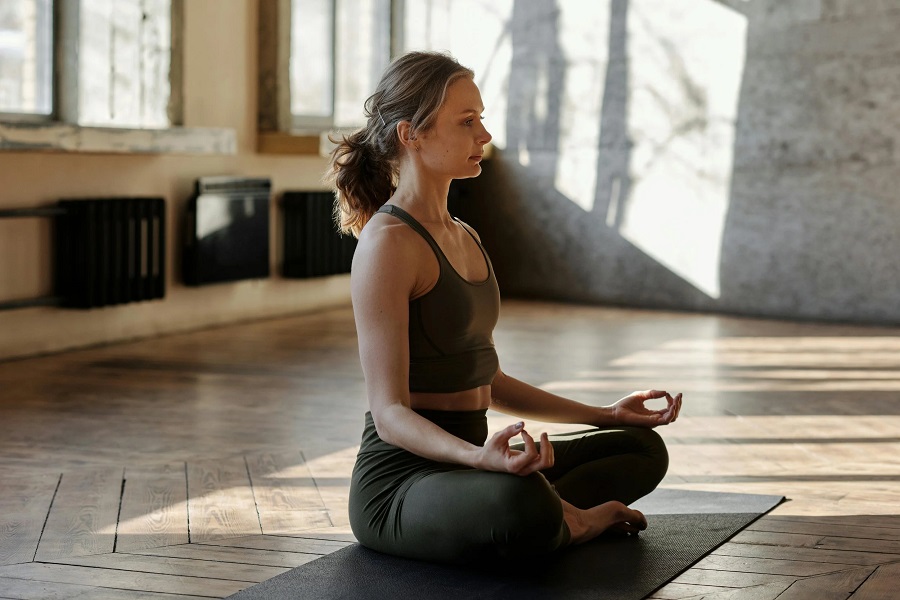
To develop physical stillness, decide on your posture before you sit down, and commit to maintaining it for the duration of your session. Sit on a supportive cushion or a firm, upright chair with your spine elongated and your hands resting calmly on your lap or knees.
Make a pact with yourself that unless there is genuine danger or acute joint pain, you will not scratch, shift, or adjust your limbs until the timer chimes. By removing bodily adjustment as an option, your mind stops constantly negotiating whether to move, allowing your attention to settle deep beneath the surface.
Silence and stillness are not empty voids to be endured or decorated with digital noise. They are the essential canvas upon which self-discovery takes place. When you learn to sit without an external voice directing your focus and without restless movement draining your energy, you uncover a deep, unflappable quiet that belongs entirely to you.

Comments are closed.